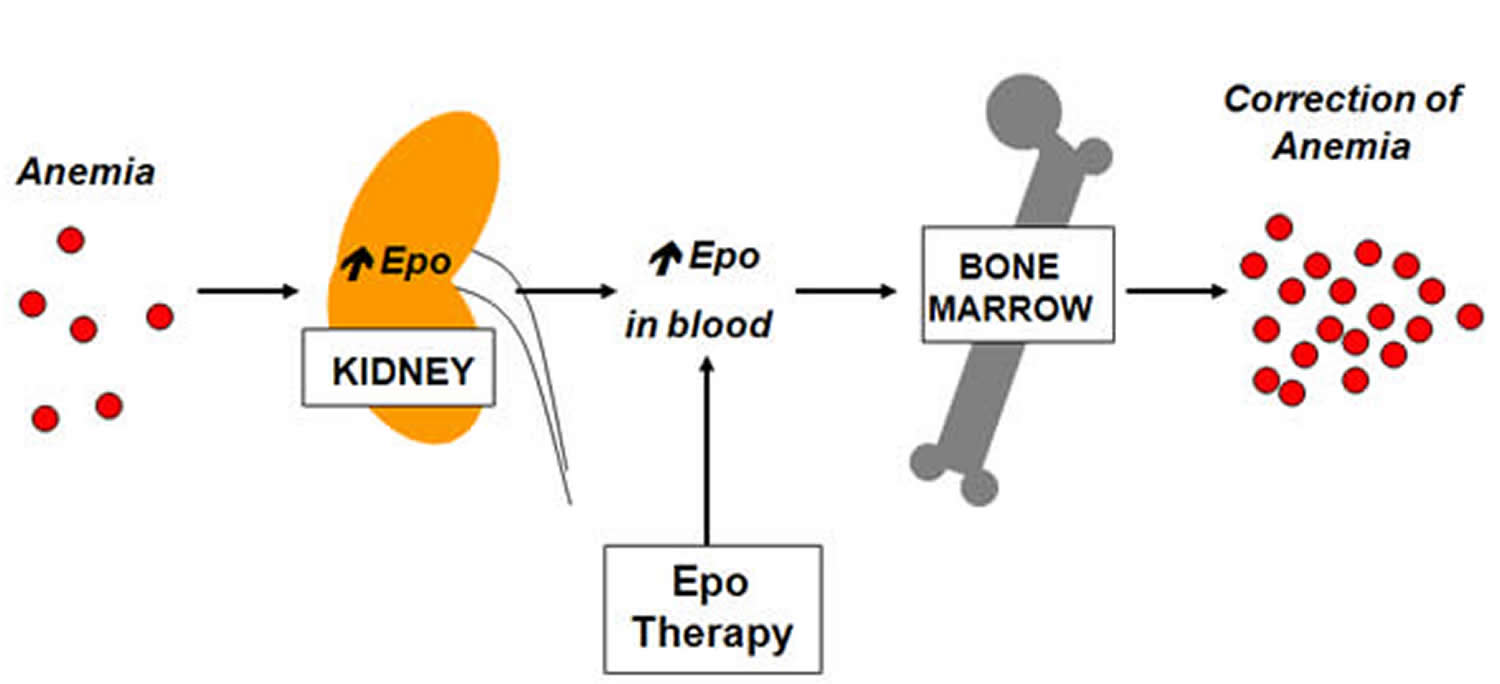
Erythropoietin (EPO) is a hormone produced by the kidney. EPO has an important role in the production of red blood cells (RBCs), which carry oxygen from the lungs to the rest of the body.
EPO is a glycoprotein. It is responsible for production of 165 amino acids, primarily via the kidneys and liver.
Normal levels of erythropoietin range from 4 up to 24 mU/ml (milliunits per milliliter).
Low levels of erythropoietin occur when someone is suffering from chronic kidney diseases. Low red blood cell counts cause anemia; symptoms include fatigue, shortness of breath, increased heart rate, and dizziness.
Erythropoiesis-stimulating agents work on soft tissue inside the bones where blood is made to make more red blood cells.
 The erythropoietin hormone can be detected and measured in the blood. An abnormal level of erythropoietin in the blood can indicate bone marrow disorders, increased red blood cell, kidney disease, or erythropoietin abuse.
Too little erythropoietin might be responsible for too few red blood cells (anemia), especially anemia related to kidney disease.
The erythropoietin hormone can be detected and measured in the blood. An abnormal level of erythropoietin in the blood can indicate bone marrow disorders, increased red blood cell, kidney disease, or erythropoietin abuse.
Too little erythropoietin might be responsible for too few red blood cells (anemia), especially anemia related to kidney disease.
Erythropoietin drug was developed with the objective to treat anemic conditions caused from end stage renal disease (ESRD) disease treatments and dialysis procedures. Followed by ESRD anemic condition, EPO drugs have gained approvals for chemotherapy-induced anemia. After post-abbreviated new drug application (ANDA) approvals and high success rate of EPO applications for chemotherapy-induced anemia, original biopharmaceutical companies turned their attention to another form of induced anemia, namely ART-induced anemia (among HIV patients).