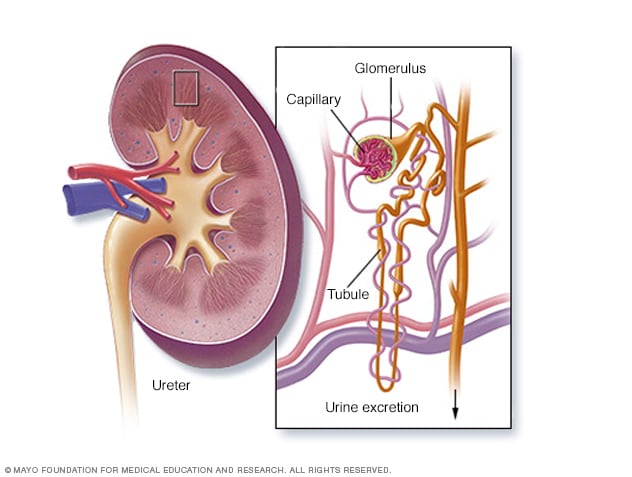
Glomerulonephritis is a kidney disease in which the part of your kidneys that helps filter waste and fluids from the blood is damaged. There may be several factors behind it. The filtering unit of the kidney is called the glomerulus. Each kidney has nearly one million glomeruli. The glomeruli help the body get rid of harmful substances.
Glomerulonephritis may be caused by problems with the body's immune system. Often, the exact cause of this condition is unknown. The condition may develop quickly, and kidney function is lost within weeks or months.
The following may increase your risk for this condition:
Blood disorder, lymphatic system disorder Cancer. Infections such as viruses, heart infections.
Many conditions cause or increase the risk for glomerulonephritis, including:
The disorder in which a protein called amyloid builds up in the organs and tissues.
Disorder that affects the glomerular basement membrane, the part of the kidney that helps filter waste and extra fluid from the blood.
Blood vessel diseases.
Disorder in which the immune system attacks the glomeruli
Kidney disease due to heavy use of pain relievers, especially NSAIDs
Disease that involves purple spots on the skin, joint pain, gastrointestinal problems and glomerulonephritis)
Disorder in which antibodies called IgA build up in kidney tissue
Glomerulonephritis often leads to high blood pressure, which can cause further kidney damage and other health problems.
Your blood pressure will be carefully monitored by the healthcare professionals treating you.
You may need to take medicines that lower blood pressure and help reduce the amount of protein that leaks into your urine, such as:
angiotensin-converting enzyme (ACE) inhibitors
angiotensin receptor blockers (ARB)
Often, people who have high blood pressure and kidney disease need to take several medicines to control their blood pressure.