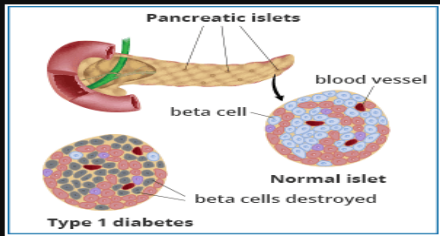
BENEFITS OF ISLET TRANSPLANTATION IN DIABETIC PATIENTS
a) Improves quality of life b) Restores or improves patient’s body ability to regulate blood sugar level. Repeated blood sugar measurement and daily insulin injection can be reduced even eliminated for 3-5 years after transplantation in few patients. c) Reduces progression of hypoglycemia for long time. d) Reduces progression of long term complications of diabetes including heart disease, kidney disease, stroke, retinopathy & neuropathy.
Beta cells are found in islets of pancreas which regulates blood sugar level, once transplanted the donor islets begin to synthesize and release insulin hormone doloremque tempore voluptatem ratione vel aut. Deleniti sunt animi aut. Aut eos aliquam doloribus minus autem quos.
RISKS ASSOCIATED WITH ISLET TRANSLANT
1. Risk of rejection is the greatest challenge.
2. Long term immunosuppressive agent may increase risk of cancer.
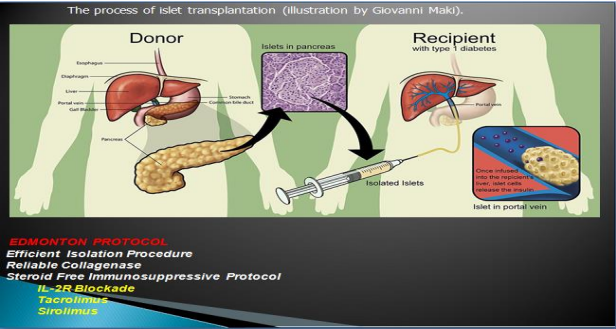
SUCCESS RATE OF ISLET CELL TRANSPLANTAION
Procedure development started in 1960s .First attempt began in 1990s, succeeded only 8%due to antirejection drugs available at time interfered with insulin effectiveness. But in 1999 at University of Alberta, Edmonton, Canada clinical trial conducted using enhanced technique with improved anti-rejection drugs, the researchers achieved 100 % success rate calledEDMONTON PROTOCOL.
CRITERIA FOR ISLET CELL TRANAPLANTATION
Typical candidates are anyone with TYPE 1 DM between 18-65 years having diabetes related complications like frequent episodes of hypoglycemia with early kidney problems leading to kidney failure. [Note:-Benefits & Risks must be weighed carefully]
LIMITATIONS
At present only 17 US centers participating in islet cell research program. ADA recommends islet transplantation should be done in major centers equipped to handle complex and long term medical and personal needs of transplant patients.
AREA OF FOCUS
1. Collecting enough islet cells (approx. 50,000) to do the transplant is a challenge, because usually
several different donors are needed .Need of Islet cells for different donor surpasses numbers of
humans donors are available. Researches are going on to retrieve islet cells from fetal tissues and pigs.
Researchers are also having planning to grow islet cells in lab.
2. Improving anti-rejection therapy with Tacrolimus and Rapamycin now showing fewer and less harmful
side effects compared to Cyclosporine and Prednisolone previously.
FUTURE PROSPECTIVE
Researchers are looking for coating islet cells with special gel that prevents immune system from recognizing and target donor cell rejection.