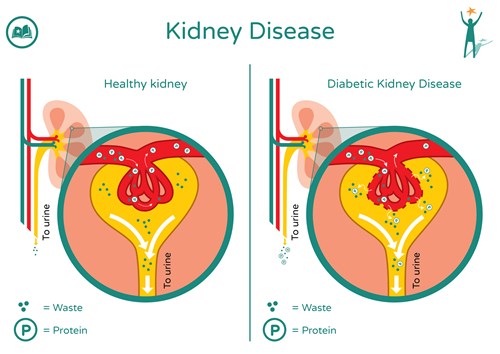
One of the most common cause of kidney failure is diabetes mellitus, a condition characterised by high blood glucose (sugar) levels. high levels of sugar in the blood damage tiny blood vessels throughout the body including the filters of the kidneys. As more damage occurs to the kidneys, more fluid and waste remain in the bloodstream instead of being removed. This eventually leads to kidney failure.
Diabetic kidney disease is a complex and heterogeneous disease with numerous overlapping etiologic pathways including changes in glomerular hemodynamics, oxidative stress and inflammation, and interstitial fibrosis and tubular atrophy.
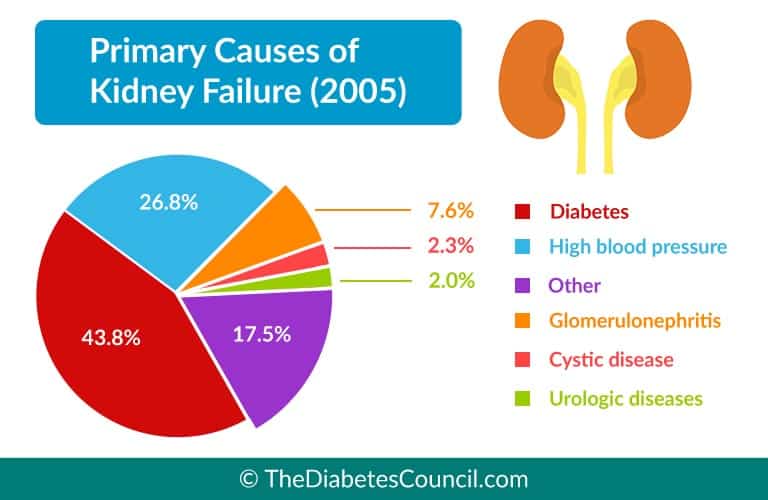
Damage to the kidneys are irreversible . This kind of kidney damage can, however, be prevented or at least delayed if precautions are taken early on. The best way to prevent diabetic kidney disease is by being on regular medication and following a healthy diet plan and exercise regularly. These keep the blood sugar levels under control.
It is important to note that the chances of getting a diabetic kidney disease can be prevented if diagnosed early. However, if you are already affected by diabetic nephropathy it is still possible to check the progression of the disease and prevent kidney failure. It is also important to keep blood pressure under control and get tested for diabetic nephropathy regularly. Smoking is an additional risk factor and diabetic patients must quit smoking before it takes a toll on kidney health.
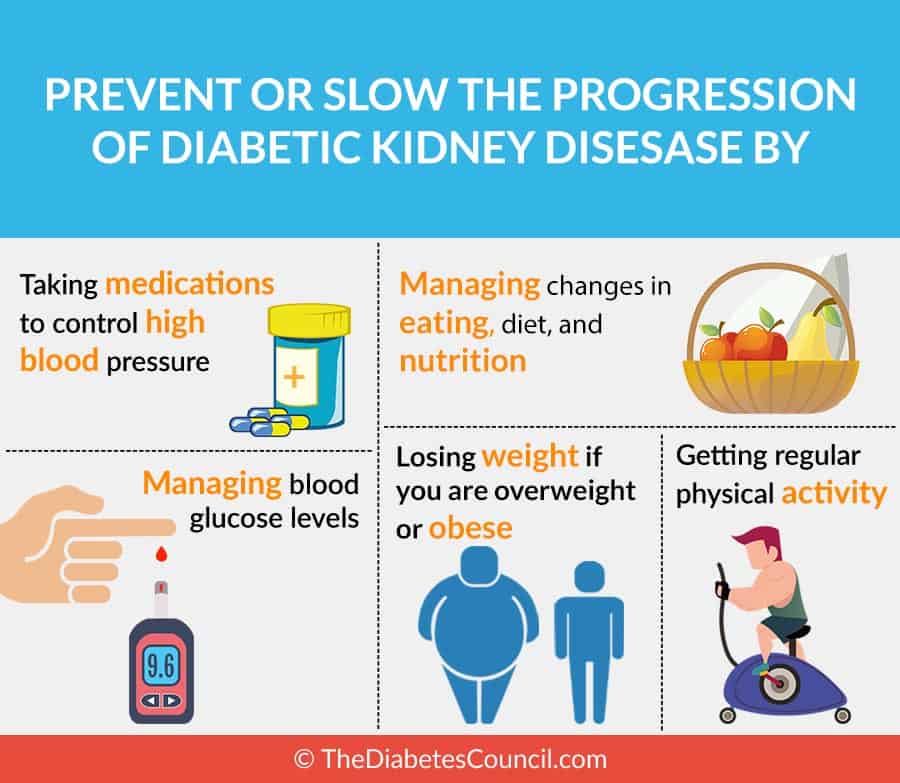 However, effectively using screening guidelines, treatment strategies, and subspecialty referral can help prevent progression of DKD. Blood pressure control is also critical to prevent and slow the progression of DKD.